The New Science of Touchpoint Optimization in Marketing


The traditional marketing funnel cannot keep pace with the complexity of modern consumer touchpoints. Today, you face a landscape where consumers interact with 6-8 marketing touchpoints before making decisions. This non-linear journey demands that you identify, measure, and optimize the touchpoints that truly influence consumer behavior.
Statistic Description | Numerical Value | Implication for Traditional Funnel Model |
|---|---|---|
Percentage of sales reps missing quota | Indicates sales targets are frequently unmet, suggesting funnel inefficiency | |
Percentage of companies missing sales goals | 50% to 70% | Shows widespread failure to achieve sales objectives under funnel model |
Average daily media consumption by adults | Over 12 hours | Reflects information overload and a complex, non-linear buyer journey |
Recent studies highlight how a data-driven approach to marketing touchpoints enhances consumer experience and maximizes influence over decisions. Platforms like brands.menu streamline touchpoint management, providing real-time data to help you track, measure, and optimize every consumer interaction.
Key Takeaways
Modern consumers interact with many touchpoints before buying, so marketers must track and optimize all these interactions, not just the final step.
Using multi-touch attribution models helps assign value to every touchpoint, improving budget decisions and increasing sales.
Combining digital and offline touchpoints, like social media and in-store experiences, gives a full picture of consumer behavior and boosts influence.
Video content and trusted creators greatly increase engagement and trust, making them essential parts of marketing strategies.
Personalization, fast service, and continuous testing improve customer satisfaction and loyalty, driving long-term growth and higher ROI.
Rethinking Marketing Touchpoints
Beyond the Funnel
You operate in a world where the classic marketing funnel no longer captures the complexity of consumer behavior. Today, marketing touchpoints extend far beyond a simple path from awareness to purchase. Consumers interact with your brand through a web of touchpoints—social media, reviews, chatbots, and organic content—each shaping their perception and decisions. AI-powered chatbots now engage users dynamically, driving up to 30% higher conversion rates compared to static forms. CRM-integrated funnels track every consumer interaction, allowing you to segment audiences and automate responses for smarter decision-making.
Traditional last-click attribution and linear funnels miss the mark. Modern consumers move fluidly between channels, devices, and stages of the journey. You must treat conversion rate optimization as an ongoing process, using tools like heatmaps and A/B testing to refine every step. This approach lets you measure the true influence of each touchpoint, not just the final click. Integrating funnel stages with real consumer interactions—such as awareness through organic search or retention via post-purchase content—enables you to optimize both conversions and long-term relationships. AI-powered insights and privacy-friendly analytics now empower you to understand and influence consumer demand at every stage.
"The traditional linear funnel model no longer reflects actual consumer behavior, which is complex, non-linear, and involves multiple touchpoints across devices and channels."
Multi-Channel Complexity
Managing marketing touchpoints across multiple channels presents new challenges. Research by Wagner, Schramm-Klein, and Steinmann (2018) shows that the rise of electronic channels—mobile devices, shopping apps, and more—complicates the online retail environment. You must evaluate each channel for quality and situational benefits, designing integrated touchpoints that address diverse consumer needs.
AI-driven engagement generates higher-quality leads and increases conversions by 25%.
Account-Based Marketing (ABM) targets high-value accounts with personalized content, aligning sales and marketing for trust-driven conversions.
Lifecycle marketing models extend engagement beyond the initial purchase, building loyalty and maximizing consumer demand.
You must recognize that every touchpoint, from the first impression to ongoing content, holds the power to influence consumer decisions. By embracing multi-channel complexity, you position your brand to meet consumer demand and maximize influence at every stage.
Consumer Touchpoints in the Customer Journey

Digital and Offline Interactions
You encounter consumer touchpoints everywhere—online and offline. Each interaction shapes the consumer journey and influences purchasing decisions. Market research shows that customers engage with brands through a mix of digital and physical channels. You see this in social media, online ads, educational content, company events, and word-of-mouth recommendations.
Social media builds brand awareness and relationships.
Online advertisements drive engagement and traffic.
Digital marketing content, such as videos and blogs, sets expectations.
Company events introduce brands to new audiences.
Word of mouth influences trust and perception.
Offline touchpoints, like in-store experiences, events, and direct mail, play a vital role in shaping consumer perceptions. You can integrate offline data from POS systems or CRM tools with online analytics to gain a complete view of consumer behavior. Offline attribution methods, such as unique promo codes or QR codes, help you measure how offline interactions influence online purchasing.
Case Study | Offline Interaction | Digital Interaction | Impact on Consumer Decision-Making |
|---|---|---|---|
Warby Parker | Home try-on program for frames | Online augmented reality virtual try-on | Reduced hesitation, increased sales conversions |
Tesla | Experiential showrooms, direct sales | Online education, interactive displays | Enhanced brand control, shifted preferences, direct sales success |
You must recognize that every touchpoint, whether digital or offline, can influence consumer decisions and purchasing behavior.
First Impressions Matter
First impressions form quickly and last long. You set the tone for the entire customer journey with the initial touchpoint. Positive first impressions foster loyalty, engagement, and advocacy. Negative experiences can deter consumers and damage your brand reputation. Memorable first experiences help you acquire new customers and encourage repeat purchasing.
Customer service during the first interaction is critical. Prompt and helpful support leads to positive perceptions and long-term relationships. Tools like CRM, chatbots, and VoIP services enhance service quality and improve first impressions. In service industries, trust built during the first encounter often determines if a consumer continues the relationship.
Tip: Focus on delivering consistent, high-quality content and service at every touchpoint. This approach maximizes your influence and strengthens consumer loyalty throughout the customer journey.
Mapping and Measuring Touchpoints
Pathways and Frameworks
You face a complex landscape where mapping marketing touchpoints requires more than intuition. Leading frameworks, such as BCG’s Category Impact Pathways (CIP) and Demand Centric Growth, help you visualize how consumers interact with your brand across channels. These frameworks encourage you to look beyond isolated actions and focus on the entire journey, from initial awareness to long-term loyalty.
Approach Category | Description | Key Metrics / Focus Areas |
|---|---|---|
Move beyond last-click attribution to multi-touch models integrating online and offline data | Time-decay attribution giving more credit to recent touchpoints | |
Customer Lifetime Value (CLV) | Shift focus from short-term conversions to long-term value creation | CLV:CAC ratio (Customer Lifetime Value to Customer Acquisition Cost) |
Engagement Quality Metrics | Measure depth and quality of interactions, not just quantity | Time spent, content completion rates, return visitor frequency |
Account-Based Marketing (ABM) KPIs | Track account penetration and engagement across buying groups | Account engagement score aggregating individual and group activities |
Velocity Metrics | Monitor speed through funnel stages and optimize demand generation pace | Sales velocity (time from lead to won customer, deal size, win rate) |
Sustainability and Ethical Impact Metrics | Incorporate ESG factors into demand generation ROI | Sustainability-driven lead quality score |
These frameworks guide you to measure not only the number of touchpoints but also their quality and impact on demand. You can use them to identify which consumer touchpoints drive the most value and where to focus your marketing orchestration efforts.
Advanced platforms like brands.menu make this process easier. You can visualize campaign performance over time, track how your messaging evolves, and compare your strategies against competitors. With brands.menu, you see your brand as consumers do, allowing you to optimize every interaction for maximum demand generation.
Attribution Models
Attribution models help you understand which marketing touchpoints influence consumer decisions. You need to move beyond first-touch or last-touch models, which oversimplify the journey. Multi-touch attribution models, such as linear, time decay, and position-based, assign value to multiple interactions. This approach gives you a more accurate picture of how each touchpoint contributes to demand and conversions.
Accuracy Level | Complexity Level | Data Requirements | Cost Level | |
|---|---|---|---|---|
First-Touch | Low (ignores later interactions) | Very Low (easy to implement) | Minimal (only initial touchpoint) | Low (simple implementation) |
Last-Touch | Low (ignores earlier interactions) | Very Low (easy to implement) | Minimal (only final touchpoint) | Low (simple implementation) |
Linear | Moderate (equal credit to all) | Low (easy to implement) | Moderate (all touchpoints tracked) | Low to Moderate |
Time Decay | High (emphasizes recent interactions) | Moderate (requires analysis) | High (all touchpoints + timing) | Moderate to High |
Position-based | High (weights first & last more) | Moderate (predefined credit) | High (all touchpoints tracked) | Moderate to High |
Data-driven | Very High (machine learning based) | Very High (advanced analytics) | Very High (comprehensive data) | High (technology & analytics) |
Multi-touch attribution models allow you to:
Assign value to multiple consumer interactions, improving accuracy over single-touch models.
Use machine learning to dynamically assign credit, leading to better budget allocation and ROI.
Track conversions, sales revenue, and channel effectiveness.
Make data-driven decisions, investing in high-performing channels and reducing waste.
Improve customer understanding and align sales and marketing teams.
Optimize marketing efforts by focusing on touchpoints that drive conversions, resulting in increased sales and revenue.
You benefit from real-time analytics and cross-channel data integration. Over 65% of marketers now use real-time data to adjust campaigns instantly. More than 70% report improved campaign views when integrating data across channels. These practices help you monitor and react to touchpoint performance as it happens.
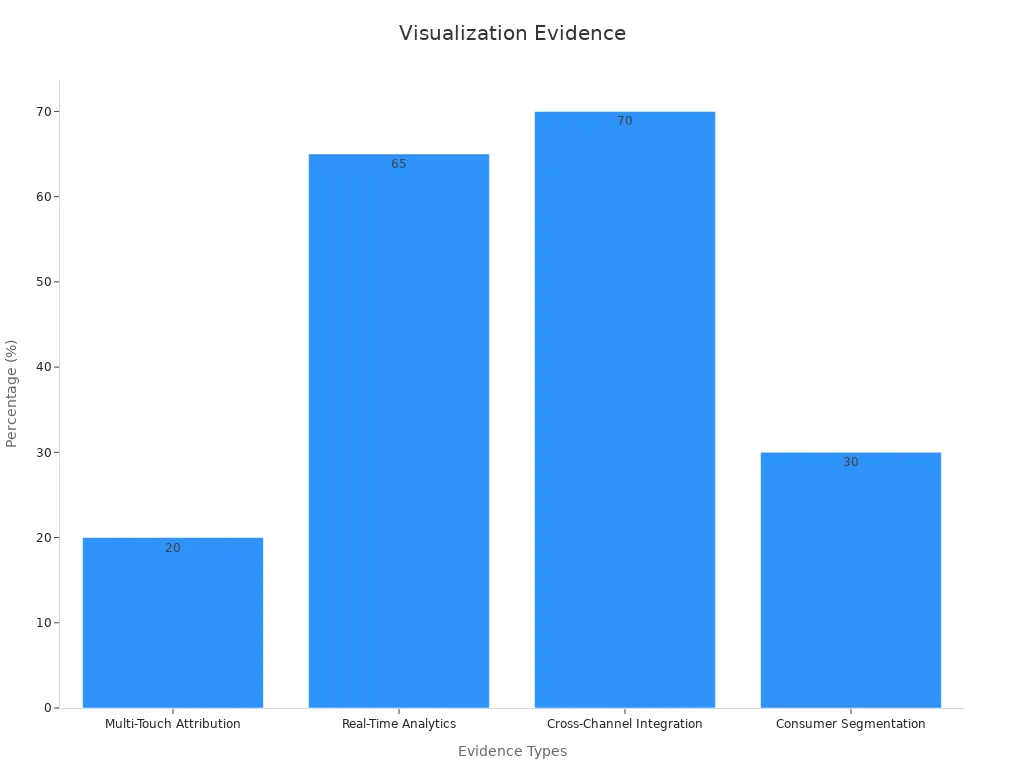
Platforms like brands.menu support these advanced attribution models. You can track touchpoint performance, visualize campaign evolution, and access insights that drive smarter marketing orchestration.
Key Metrics
You need to validate the performance of your marketing touchpoints using clear, actionable metrics. The right measurement approach ensures you focus on touchpoints that drive demand and deliver value throughout the consumer journey.
Conversion Rates: Measure how effectively a channel or campaign converts prospects into customers, highlighting successful touchpoints.
Revenue Contribution: Track the financial impact and ROI of each channel, helping you prioritize high-value touchpoints.
Churn Analysis: Identify touchpoints that may cause consumer drop-off, allowing you to improve retention.
Lead Quality: Assess whether channels generate high-intent leads aligned with your business goals.
Qualitative Insights: Use customer feedback and behavioral trends to complement quantitative metrics and enhance attribution accuracy.
Tools and Techniques: Leverage platforms like brands.menu, Google Analytics 4, HubSpot, and Tableau to track, visualize, and integrate these metrics.
Model Testing and Optimization: Regularly experiment with attribution models and cross-channel data integration to ensure your metrics remain valid and actionable.
Tip: Focus on continuous measurement and optimization. Use real-time analytics to adapt quickly and maximize the impact of every consumer touchpoint.
By combining robust frameworks, advanced attribution models, and actionable metrics, you gain a comprehensive view of your marketing touchpoints. This approach empowers you to drive demand, improve consumer experiences, and achieve measurable growth.
Video and Creator Influence
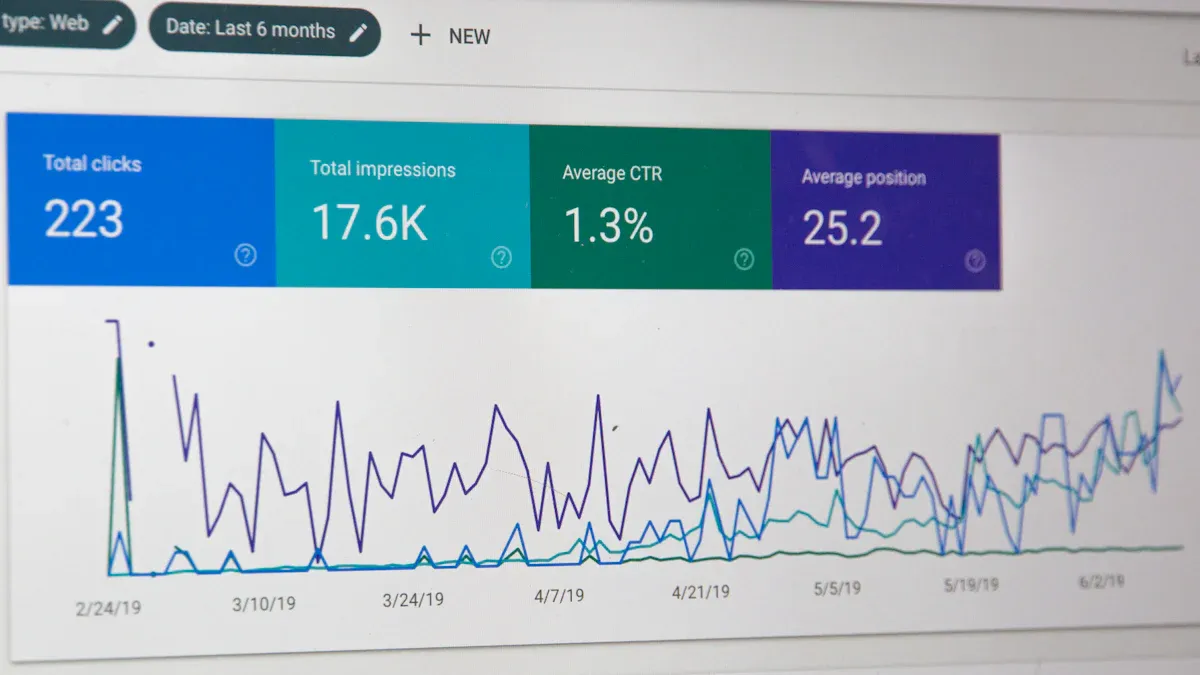
Digital Video Impact
You see digital video shaping the way consumers interact with brands. Video content now dominates online activity and drives engagement across every channel.
Over 82% of consumer internet traffic comes from online videos, with people watching more than 100 minutes daily.
Vertical videos generate 130% higher engagement rates than horizontal formats.
Short-form videos deliver more than double the engagement of longer content.
Interactive video elements can boost user activity by up to 591%.
Shoppable videos increase conversion rates by up to 30% and raise purchase intent ninefold.
User-generated content videos achieve four times higher click-through rates and cut cost-per-click by half.
AI tools reduce video production time by up to 80% and enable personalized video content.
Mobile vertical video consumption is surging, with 90% of consumers watching on mobile devices.
Brands like Puma have seen earnings-per-click rates 24 times higher than average using shoppable video content.
These trends show that you must prioritize video content in your marketing strategy. Interactive, short-form, and user-generated content formats deliver the highest influence on consumer decisions. You can use these formats to increase engagement, drive conversions, and amplify your brand’s influence across digital touchpoints.
Tip: Focus on mobile-first, interactive video content to maximize your influence and reach consumers where they spend the most time.
Building Trust
You build trust by leveraging the influence of digital creators. Recent research highlights that content creators play a crucial role in shaping consumer trust and online shopping preferences. Studies show that authenticity, engagement, and perceived expertise of creators enhance brand perception and product desirability. When you collaborate with creators who align with your brand values, you strengthen your influence and foster genuine engagement.
Influencer partnerships allow you to tap into the trust and credibility creators have with their followers. Social proof, such as testimonials and user-generated content, further boosts your brand’s credibility. Case studies reveal that influencer marketing delivers 11 times the ROI of traditional ads, and 92% of consumers trust influencers more than standard advertising. Strategic creator selection can lead to impressive returns, as seen in campaigns achieving over eight times return on ad spend.
You can amplify your influence by integrating creator-driven content into your marketing mix. This approach not only builds trust but also increases the effectiveness of every touchpoint in the customer journey.
Optimizing the Customer Journey
Personalization
You can transform the customer journey by delivering personalized experiences at every stage. Data shows that 80% of consumers are more likely to make a purchasing decision when you offer tailored interactions. When you overcome data silos and improve data quality, you boost engagement, conversion rates, and loyalty. Personalized marketing lets you deliver relevant messages and offers at the right time, which increases both conversion and retention.
Industry | Conversion Lift | Customer Retention Impact | Revenue Increase |
|---|---|---|---|
E-commerce | 5-10% | 8-12% | |
Financial Services | 5-8% | 3-5% | 4-7% |
Healthcare | 3-5% | 2-4% | 2-5% |
Travel & Hospitality | 8-12% | 4-6% | 6-10% |
Personalization also drives higher satisfaction and repeat purchasing. You can use platforms like brands.menu to centralize your data, visualize consumer interactions, and refine your touchpoints for maximum impact.
Speed and Value
Speed and value shape how consumers perceive your brand. Nearly 80% of Americans say fast, convenient, and knowledgeable service defines a positive experience. AI-powered chatbots and recommendation engines help you deliver quick responses and streamline purchasing. Companies that treat service as a value center see faster revenue growth.
AI improves response times by 20%, raising satisfaction.
Chatbots increase first-call resolution by 25% and reduce churn by 10%.
Brands like H&M use AI chatbots to enhance consumer satisfaction.
You should monitor metrics like First Response Time and Average Resolution Time to ensure your touchpoints deliver both speed and value throughout the customer journey.
Testing and Experimentation
Continuous testing helps you optimize touchpoints and adapt to changing consumer behavior. Structured experimentation, such as A/B testing and multivariate analysis, leads to scalable growth. A 5% increase in retention can boost profitability by up to 95%. Companies like Allianz and Coca-Cola improved marketing effectiveness by running frequent experiments and analyzing results.
Build feedback loops with surveys and analytics.
Run multiple experiments to accelerate learning.
Document outcomes to create a knowledge base for future campaigns.
Platforms like brands.menu support ongoing optimization by providing real-time insights and competitor analysis. You can refine your strategies, monitor purchasing patterns, and ensure your touchpoints remain effective as consumer expectations evolve.
Best Practices for Marketing Touchpoints
Data-Driven Decisions
You gain a competitive edge when you base your marketing strategy on data. Data-driven approaches allow you to segment your audience, predict trends, and deliver personalized experiences that increase consumer loyalty and advocacy. By analyzing data at every stage, you can refine your touchpoints and maximize your influence on consumer behavior. Consider these benefits:
Break down your audience into segments for targeted messaging.
Use predictive analysis to spot trends and stay ahead of competitors.
Personalize each interaction to improve consumer satisfaction.
Monitor results and optimize campaigns continuously.
Allocate your budget to the most effective channels for higher ROI.
Adjust campaigns in real time to boost performance and returns.
Schneider Electric’s use of AI-powered business intelligence tools shows how democratizing data access empowers everyone to make informed decisions. McKinsey research reveals that 71% of consumers expect personalized interactions, highlighting the need for data-driven insights to influence every step of the journey.
Resource Allocation
You must allocate resources wisely to maximize the influence of your marketing touchpoints. Predictive analytics helps you identify which channels and campaigns deliver the highest ROI. This approach lets you prioritize high-impact areas and measure campaign performance in real time. Optimization models, such as mean-variance frameworks, balance risk and return, ensuring your marketing strategy remains efficient and effective. Retailer segmentation and advanced analytics further improve your ability to influence consumer decisions and strengthen brand equity.
Real-time measurement supports ongoing improvements.
Segmentation creates actionable groups for targeted influence.
AI and automation enhance precision in resource allocation.
Continuous Improvement
You drive long-term success by embracing continuous improvement. Regular testing, analytics, and feedback loops help you adapt your marketing strategy to changing consumer needs. A/B testing, predictive analytics, and multi-channel attribution allow you to optimize touchpoints and increase your influence over time. Studies show that 13% of improvements save money, with over 30% of those savings recurring annually. Time-saving improvements average nearly one hour per day, and engaged frontline employees can generate $25,000 in annual financial impact.
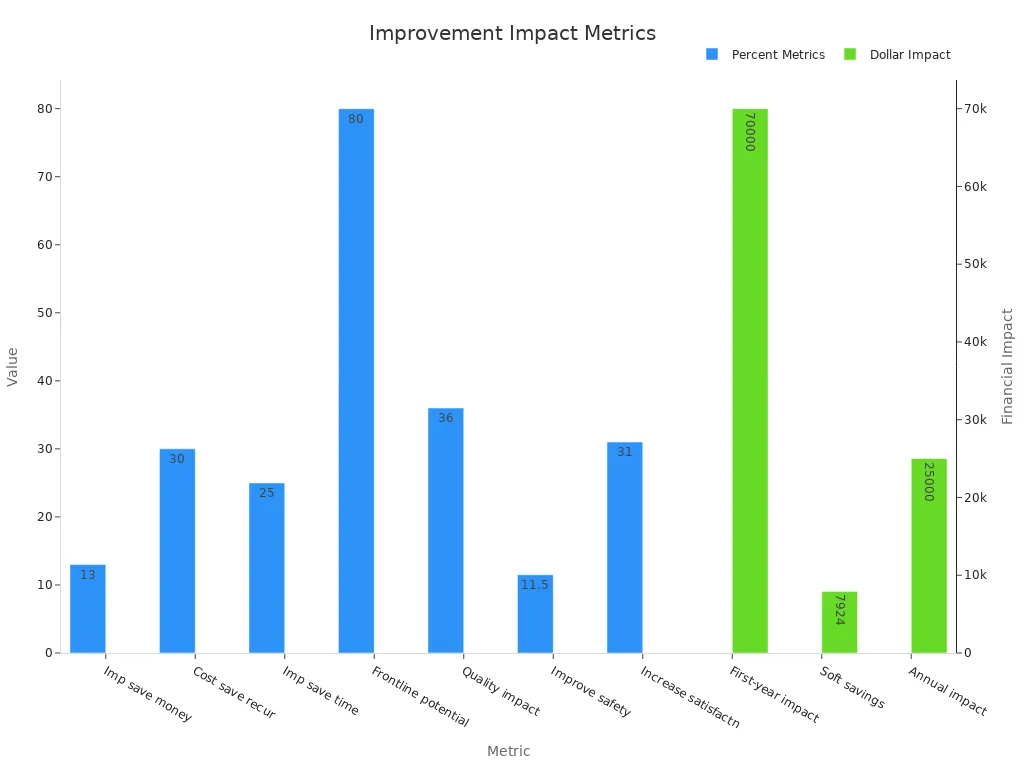
You can achieve higher consumer satisfaction, better quality, and increased safety by making small, data-driven changes. Continuous improvement ensures your marketing touchpoints remain relevant and influential, driving sustained growth and ROI.
You now operate in a marketing world that demands a scientific, adaptive approach. Mapping, measuring, and optimizing consumer touchpoints drive stronger influence and higher ROI. Consider these proven strategies:
Use multi-touch attribution models to assign revenue credit across all touchpoints.
Implement cohort analysis and segmentation to understand buyer behavior.
Leverage AI-based predictive modeling for smarter marketing decisions.
Statistic Description | Key Data Points | Impact on ROI and Consumer Touchpoints |
|---|---|---|
Retailers reporting increased sales and marketing ROI through journey mapping | 87% | Demonstrates strong ROI improvement by mapping consumer journeys |
Companies prioritizing customer experience reporting increased revenue | 84% | Links customer experience focus with revenue growth, underscoring touchpoint optimization |
Customers spending more with personalized experiences based on journey insights | 140% increase | Shows the financial benefit of personalization at key touchpoints |
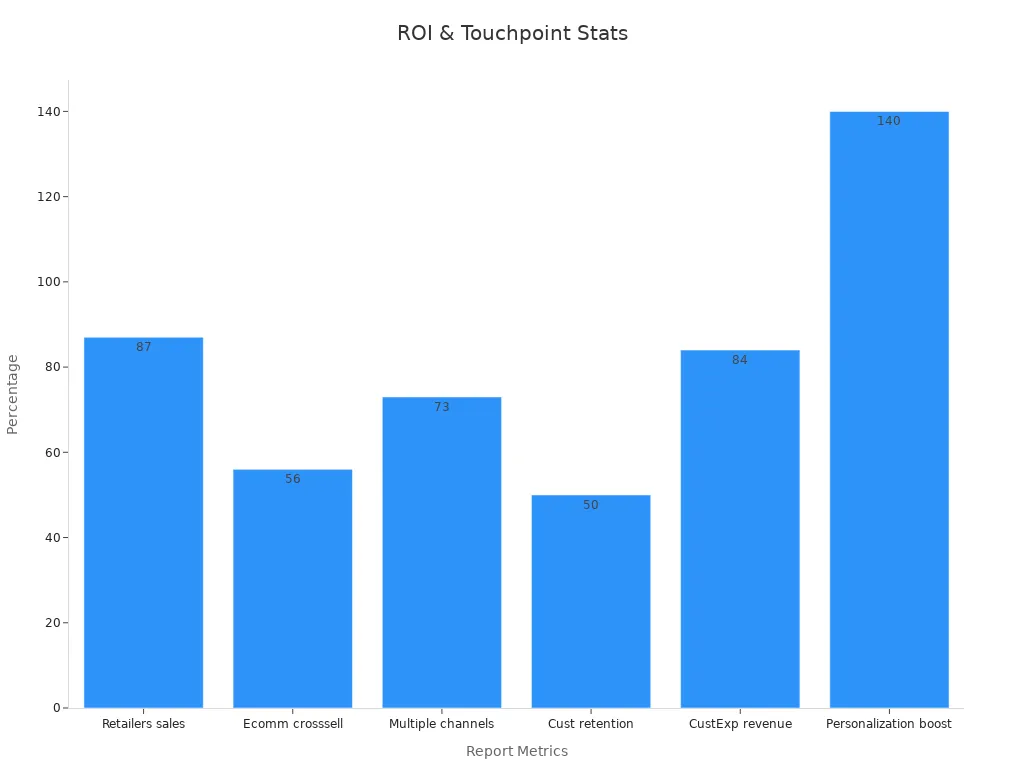
Industry benchmarks show that regular audits and advanced analytics help you identify gaps, refine your strategies, and outperform competitors. Brands.menu empowers you to visualize, track, and optimize every touchpoint. Start auditing your touchpoint strategy today to stay ahead in a dynamic market.
FAQ
What is touchpoint optimization in marketing?
Touchpoint optimization means you identify, measure, and improve every interaction a consumer has with your brand. You focus on the moments that influence decisions and drive results.
How does brands.menu help you manage marketing touchpoints?
brands.menu gives you a centralized dashboard. You can track campaigns, visualize performance, and compare your brand with competitors. The platform helps you see your brand as consumers do and make data-driven improvements.
Why should you use multi-touch attribution models?
Multi-touch attribution models let you assign value to every touchpoint in the customer journey. You gain a clearer picture of what drives conversions and can allocate your budget more effectively.
What are the most important metrics for touchpoint optimization?
Focus on these key metrics:
Conversion rate
Revenue contribution
Lead quality
Churn rate
Engagement score
These metrics help you measure and improve your marketing impact.
See Also
Top Marketing Tools To Boost Your Brand Effectively
Unlock Your Brand’s Full Power Using These Resources
Ten Must-Have Tools To Achieve Branding Success

Try our Brand Suite for FREE

